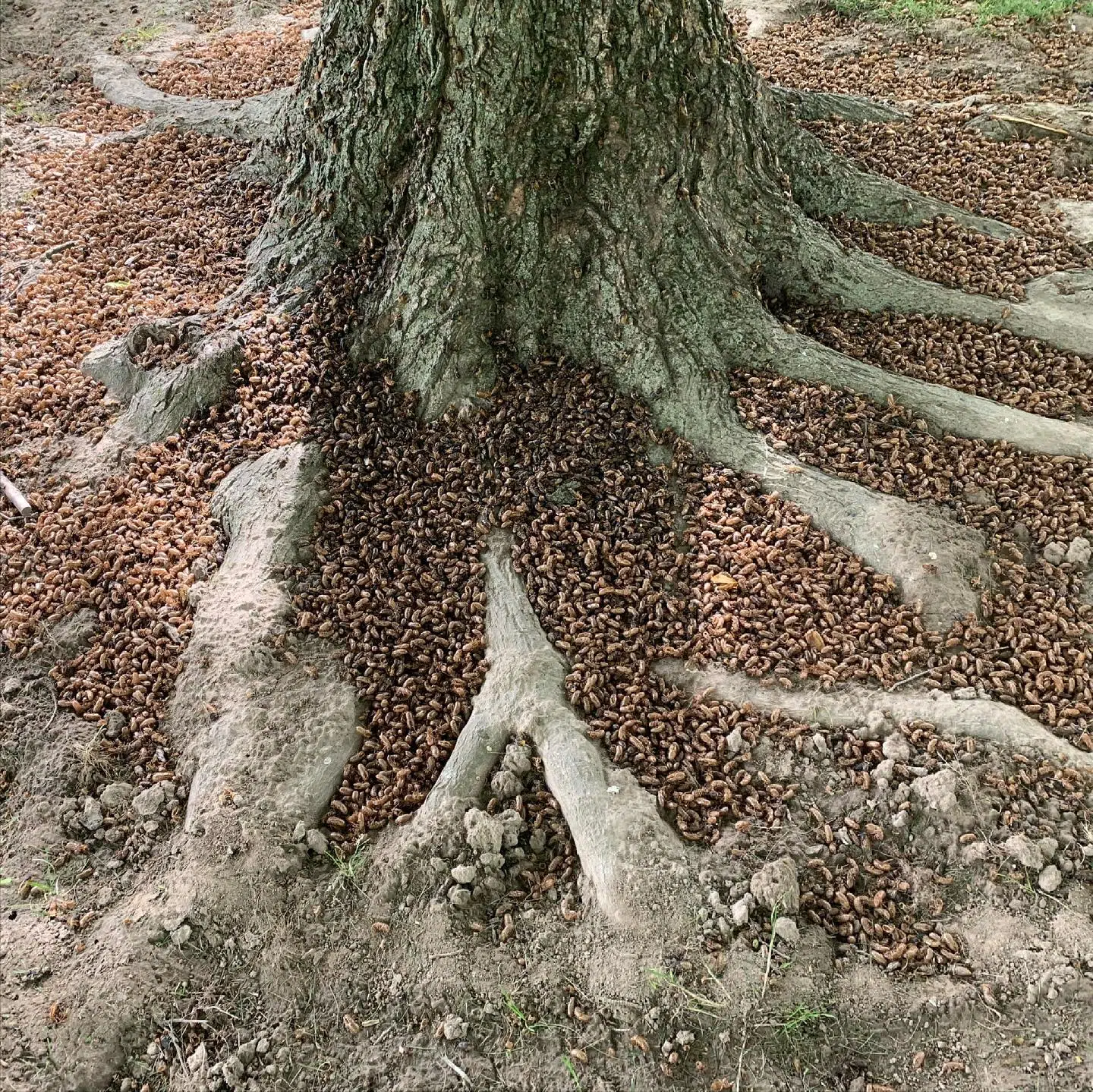
Visitors to Forest Glen Preserve and Kennekuk County Park will notice the distinct buzzing sounds of cicadas deafening the air.
(A brief clip of the cicada noise, captured at Kennekuk County Park this week.)
Both parks have been taken over by the Brood X (10) cicadas, which are one of several groups of cicadas, but stay underground for 17 years as grubs and then emerge to mate. Lara Danzl is the Education Supervisor for the Vermilion County Conservation District:
“Brood X cicadas are slightly smaller, and they have red eyes, whereas our Dog-day cicadas are a little bit larger with a brownish-yellow eye, so they look different,” she explains. “But, we’ll still have the annual cicadas (later this summer), but they’re not going to be as numerous.”
Once above ground, each cicada sheds its excess skin in a process called molting, and then begins mating. Danzl says that male cicadas can pair with multiple females over the 4-6 weeks they are above ground, finally dying and their eggs falling back to the ground, where they will re-emerge in 2038.
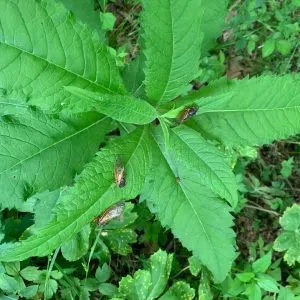
Three Brood X cicadas are seen on a plant at Forest Glen Preserve earlier this month.
Cicadas benefit both the soil and plants. The underground bugs help aerate the soil, and the mature ones help to prune trees. Once they die, they will become compost material and also food for deer and other animals. A unique fact is that not all of the cicadas make noise.
“So there’s probably, I don’t know what the percentage is, equal male and female right now,” she says. “The males are the ones that are singing. The female’s don’t make any noise, so we’re only hearing half of the cicadas because the other half can’t sing.”
The Vermilion County Conservation District is hosting a guided hike at Forest Glen on Saturday, June 19 where participants can learn more about the Brood X cicadas. You can register for the event online.